In this article
Each 3D printer company takes its own approach to software, openness, multicolor printing and price. This guide lays out the facts about seven major consumer brands, including their lineups, how open their software is, and how their multicolor systems work, so you can decide what matters to you.
About this guide. This is a factual comparison, not a review, and it doesn’t rank brands. Facts come from manufacturers’ own pages, their public code repositories and news coverage, listed in the sources at the end. Prices update automatically from each brand’s official US store, the same prices our price tracker follows, and were last checked October 22, 2026. Many are sale prices. Warranty and support terms vary by brand and region, so check them before you buy.
Disclosure: 3DPrinterMike, who runs Tinker Signal, has worked with most of the brands in this guide. It’s safest to assume we have a past or current relationship with any brand listed here. No brand had any input on this guide.
What actually differs between brands
- Firmware openness. Some brands publish all of their printer software, some publish part of it, and some publish none. This decides how much you can modify the printer and whether it keeps working without the company’s app or cloud.
- Multicolor method. Most brands swap filament through a single nozzle, which purges some filament on every color change. Toolchangers and multi-nozzle printers switch between separate nozzles, which purges much less.
- Enclosure and heated chamber. Materials like ABS, ASA and nylon print best inside an enclosure, and best of all in a chamber that is actively heated. Not every brand offers one.
- Printer type. Bed-slingers move the print bed back and forth and are usually cheaper and unenclosed. Core XY printers only move the bed up and down, which allows faster printing and is common in enclosed printers.
- Price. The same features can cost very different amounts from brand to brand, and sale prices move a lot.
Every brand at a glance
| Brand | Printer types | US price range | Firmware source | Multicolor system | Actively heated chamber |
|---|---|---|---|---|---|
| Bambu Lab | Bed-slinger, Core XY | $219 – $2,199 | Not published | AMS (single nozzle); dual- and multi-nozzle models | Yes: X2D, H2 series |
| Prusa | Bed-slinger, Core XY, toolchanger | $549 – $2,299 | Published (GPL) | MMU3 (single nozzle); INDX and XL toolchangers | No dedicated heater; the CORE One L+ heats its chamber with the bed and fans |
| QIDI | Core XY | $349 – $1,099 | Published for some models | QIDI Box (single nozzle) | Yes: Q2, Plus5, Max4 |
| Creality | Bed-slinger, Core XY | $179 – $999 | Partly published | CFS (single nozzle) | Yes: K2 Pro, K2 Plus |
| Elegoo | Bed-slinger, Core XY, large format | $239 – $2,299 | Published for Centauri Carbon (completeness disputed) | CANVAS (single nozzle) | No |
| Anycubic | Bed-slinger, Core XY | $199 – $899 | Partly published | ACE Pro / ACE 2 Pro (single nozzle) | Yes: Kobra S1 Max |
| Snapmaker | Toolchanger, 3-in-1 | $749 – $1,849 | Mostly published; some features closed | Four separate print heads | No (optional top cover) |
Bambu Lab
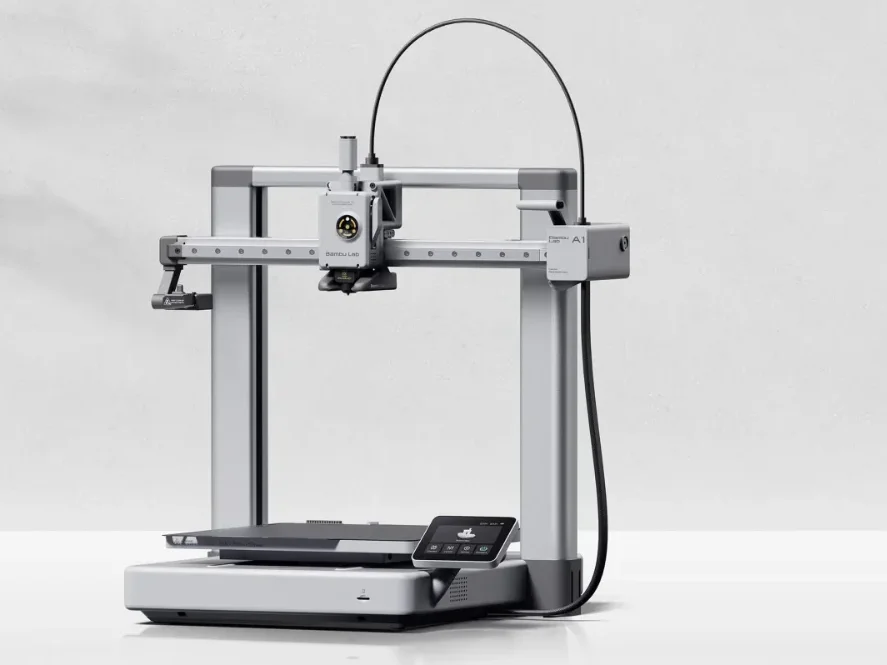
Bambu Lab launched its first printer, the X1, in 2022. It sells both bed-slingers and enclosed Core XY printers, all built around its own software, app and cloud service.
Official site: bambulab.com · US store
| Model | Type | Build volume (mm) | Enclosure | Max nozzle temp | Multicolor | Printer only | Multicolor combo |
|---|---|---|---|---|---|---|---|
| A1 mini | Bed-slinger | 180 × 180 × 180 | Open | 300°C | Up to 16 | $219 | $329 |
| A1 | Bed-slinger | 256 × 256 × 256 | Open | 300°C | Up to 16 | $299 | $399 |
| A2L | Bed-slinger | 330 × 320 × 325 | Open | 300°C | Up to 19 | $469 | $569 |
| P1S | Core XY | 256 × 256 × 256 | Enclosed | 300°C | Up to 16 | $399 | $549 |
| P2S | Core XY | 256 × 256 × 256 | Enclosed | 300°C | Up to 20 | $549 | $749 |
| X2D | Core XY, dual nozzle | 256 × 256 × 260 | Heated, up to 65°C | 300°C | 2 nozzles; up to 25 | $649 | $899 |
| H2S | Core XY | 340 × 320 × 340 | Heated, up to 65°C | 350°C | Up to 24 | $1,199 | $1,399 |
| H2D | Core XY, dual nozzle | 325 × 320 × 325 | Heated, up to 65°C | 350°C | 2 nozzles; up to 25 | $1,549 | $1,749 |
| H2C | Core XY, multiple nozzles | 325 × 320 × 320 | Heated, up to 65°C | 350°C | Up to 25 | Only sold as combo | $2,199 |
- Multicolor: the AMS family of filament units. Depending on the model, up to 16 to 25 colors with several units connected.
- Software: Bambu Studio slicer and the Bambu Handy app. Printer firmware is closed.
- Local control: since a January 2025 “Authorization Control” update, printing and control from third-party tools goes through Bambu’s own software. An optional LAN-only “Developer Mode” allows full local control but turns off the Handy app and cloud features. Printing from an SD card works without either.
Coming soon from Bambu Lab
Details and sources for each are on our Coming Soon list.
Prusa
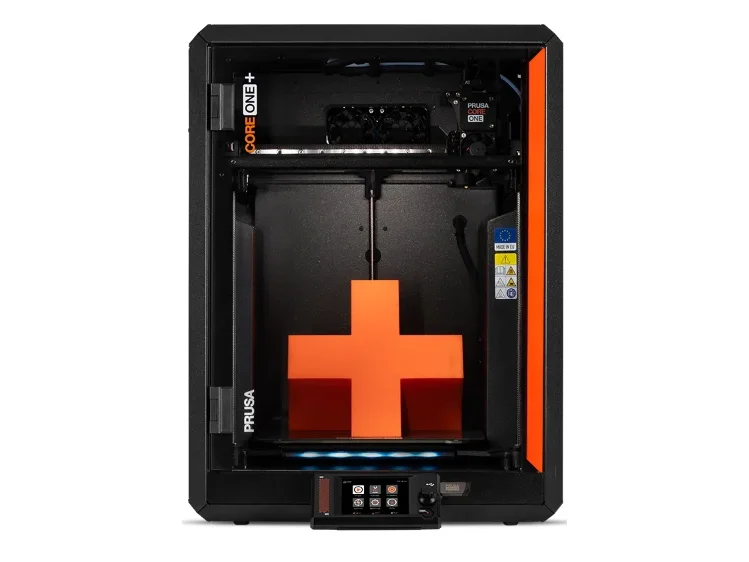
Prusa Research is a Czech company that grew out of the open-source RepRap project. It has also built printers in Delaware since 2024, and its US store, formerly Printed Solid, became Prusa USA in July 2026.
Official site: prusa3d.com
| Model | Type | Build volume (mm) | Enclosure | Max nozzle temp | Multicolor | Printer only | Multicolor combo |
|---|---|---|---|---|---|---|---|
| MINI+ | Bed-slinger | 180 × 180 × 180 | Open | 280°C | None | $549 semi-assembled | — |
| MK4S | Bed-slinger | 250 × 210 × 220 | Open (enclosure sold separately) | 290°C | Up to 5 with MMU3 add-on | $999 assembled, $709 kit | — |
| CORE One+ | Core XY | 250 × 220 × 270 | Enclosed, up to 55°C (warmed by the bed) | 290°C | Up to 5 with MMU3, or up to 8 with INDX | $1,299 assembled | — |
| CORE One L+ | Core XY | 300 × 300 × 330 | Enclosed, up to 60°C (bed heat circulated by fans) | 290°C | Up to 8 with INDX | $1,999 assembled | — |
| XL+ | Core XY toolchanger | 360 × 360 × 360 | Open (enclosure sold separately) | 290°C | 1 to 5 print heads | $2,299 (1 print head) | $3,899 (5 print heads) |
- Multicolor: the MMU3 (up to five filaments through one nozzle), the INDX toolchanger for the CORE One (up to eight tools, shipping since August 2026) and the XL’s multiple print heads.
- Software: printer firmware and PrusaSlicer are published as open source. In December 2025, Prusa released the full CAD files for the CORE One under its own Open Community License, which allows modifying and repairing but not selling complete machines.
- Local control: printers work fully offline, with PrusaLink on the local network and an optional Prusa Connect cloud service.
Coming soon from Prusa
- CORE One+ INDXPrusa estimates new orders ship after December 21, 2026
- CORE One L+ INDXPrusa estimates new orders ship after January 18, 2027
Details and sources for each are on our Coming Soon list.
QIDI
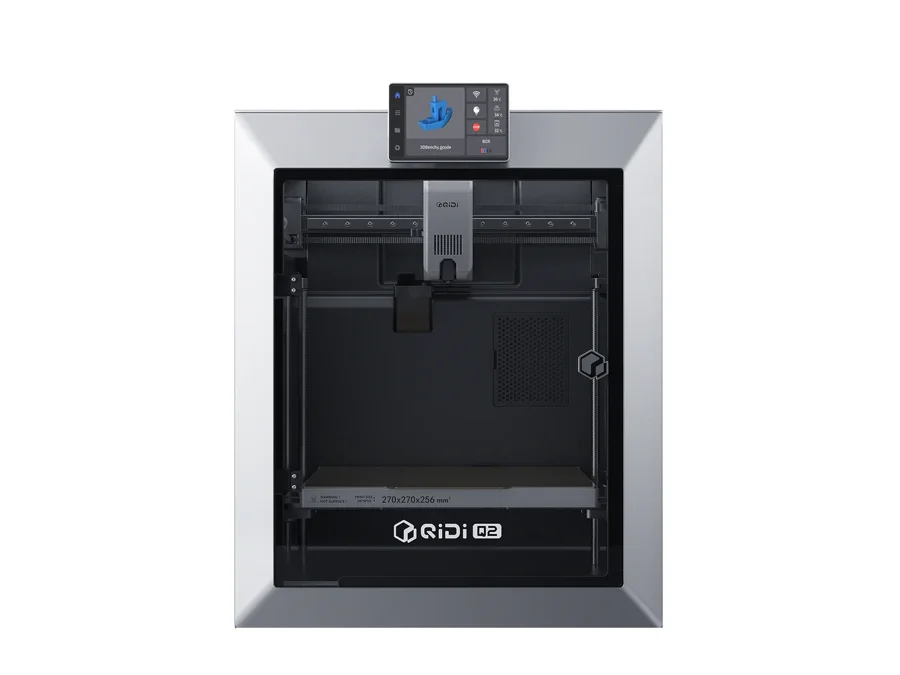
QIDI Tech builds enclosed Core XY printers, several with actively heated chambers and high-temperature hotends aimed at materials like ABS, ASA, nylon and carbon-fiber filament.
Official site: qidi3d.com · US store
| Model | Type | Build volume (mm) | Enclosure | Max nozzle temp | Multicolor | Printer only | Multicolor combo |
|---|---|---|---|---|---|---|---|
| Q2C | Core XY | 270 × 270 × 256 | Enclosed | 370°C | Up to 16 | $349 | $529 |
| Q2 | Core XY | 270 × 270 × 256 | Heated, up to 65°C | 370°C | Up to 16 | $499 | $649 |
| Plus5 | Core XY | 320 × 320 × 300 | Heated, up to 65°C | 370°C | Up to 16 | $749 | $899 |
| Max4 | Core XY | 390 × 390 × 340 | Heated, up to 65°C | 370°C | Up to 16 | $1,099 | $1,249 |
- Multicolor: the QIDI Box, a four-slot unit that also dries filament. Up to four can be connected, for 16 colors.
- Software: printers run a modified version of Klipper with the Fluidd web interface. QIDI has published the source for the Q2 and Plus4 but not yet for the Plus5 or Max4; a public request for it was opened in September 2026. The QIDI Studio slicer is based on Bambu Studio, and OrcaSlicer also supports QIDI printers.
Creality
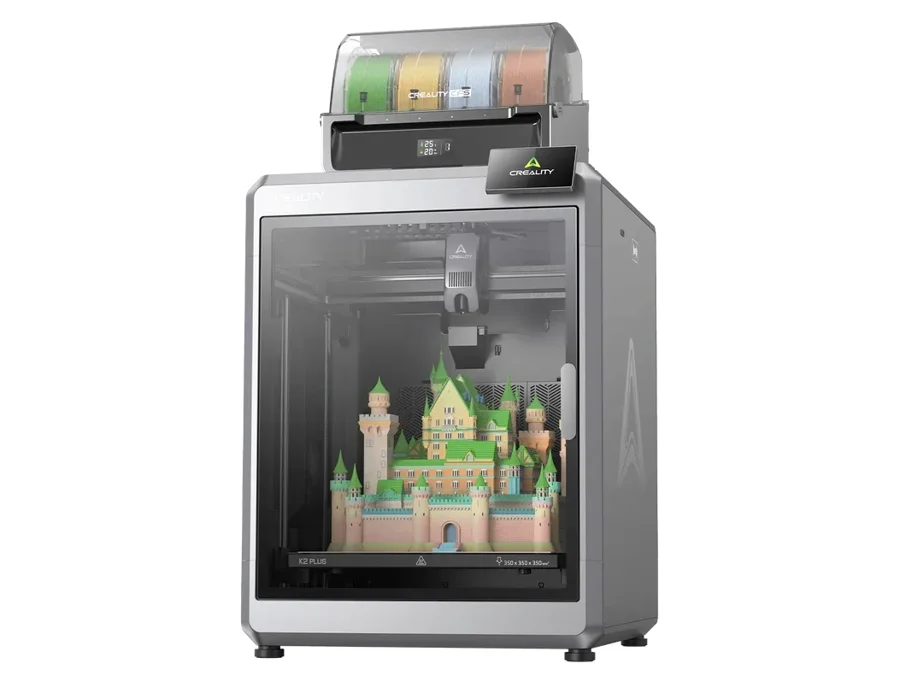
Creality made its name with the low-cost Ender-3 and is one of the largest consumer printer makers; it cites research ranking it second worldwide, with 11.2% of consumer 3D printer sales by value in 2025.
Official site: creality.com · Store
| Model | Type | Build volume (mm) | Enclosure | Max nozzle temp | Multicolor | Printer only | Multicolor combo |
|---|---|---|---|---|---|---|---|
| Ender-3 V3 SE | Bed-slinger | 220 × 220 × 250 | Open | 260°C | None | $179 | — |
| SPARKX i7 | Bed-slinger | 260 × 260 × 255 | Open | 300°C | Up to 4 | $229 | $349 |
| Hi | Bed-slinger | 260 × 260 × 300 | Open | 300°C | Up to 16 | $299 (out of stock) | $449 (out of stock) |
| K1C | Core XY | 220 × 220 × 250 | Enclosed | 300°C | Up to 4 with CFS-C add-on | $499 | — |
| K2 | Core XY | 260 × 260 × 260 | Enclosed | 300°C | Up to 16 | $419 | $521 |
| K2 Pro | Core XY | 300 × 300 × 300 | Heated, up to 60°C | 300°C | Up to 16 | $599 | $799 |
| K2 Plus | Core XY | 350 × 350 × 350 | Heated, up to 60°C | 350°C | Up to 16 | $999 | $1,199 |
- Multicolor: the CFS filament system, in several versions. Up to four units can be connected on the K2 series and Hi, for 16 colors.
- Software: the K-series and Hi run Creality OS, based on Klipper, with root access and the Fluidd web interface. Creality publishes source code on GitHub, but for the K2 series some modules that control the CFS and motors are released only as compiled files, which Klipper’s moderators have called a license violation. The Creality Print slicer is based on OrcaSlicer.
Coming soon from Creality
- K3Creality's US store estimates shipping November 2; Creality expects Europe availability in December 2026
- SPARKX i8October 2026 from Creality's factories, with delivery expected in November (Creality's estimate)
- HALOT-X1 Max
Details and sources for each are on our Coming Soon list.
Elegoo
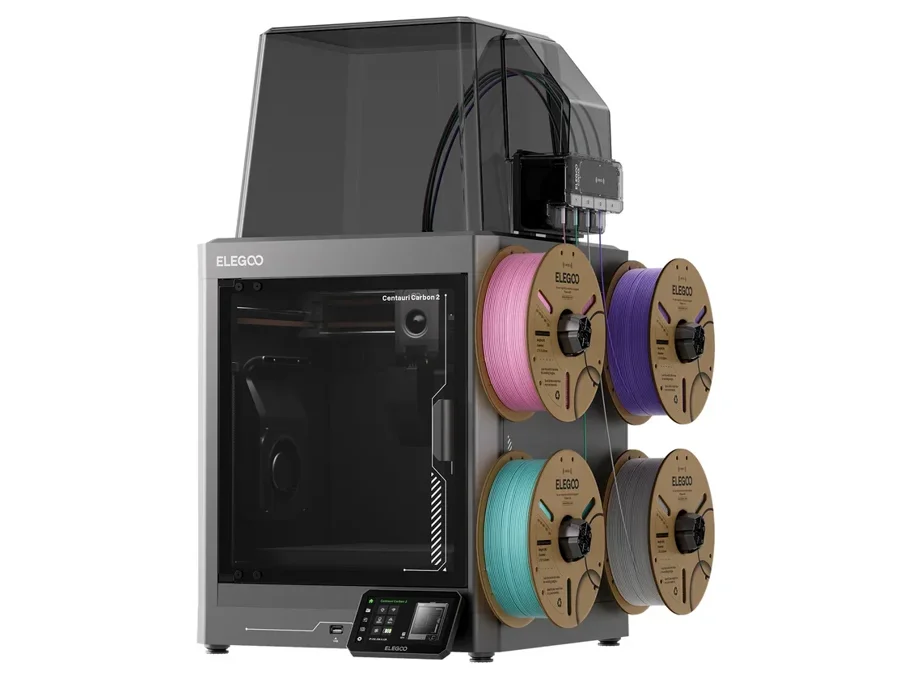
Elegoo is known for its Saturn and Mars resin printers, and since 2025 for the Centauri Carbon line of enclosed Core XY filament printers. It also sells the OrangeStorm Giga, with an 800 × 800 × 1,000 mm build volume.
Official site: elegoo.com · US store
| Model | Type | Build volume (mm) | Enclosure | Max nozzle temp | Multicolor | Printer only | Multicolor combo |
|---|---|---|---|---|---|---|---|
| Neptune 4 Pro | Bed-slinger | 225 × 225 × 265 | Open | 300°C | None | $239 | — |
| Centauri 2 | Core XY | 256 × 256 × 256 | Open | 350°C | Up to 4 | $244 | $284 |
| Centauri Carbon 2 | Core XY | 256 × 256 × 256 | Enclosed | 350°C | Up to 4 | $319 | $369 |
| OrangeStorm Giga | Fixed-bed gantry | 800 × 800 × 1000 | Open | 300°C | None | $2,299 | — |
- Multicolor: the four-slot CANVAS system, included with the Centauri Carbon 2 Combo and Centauri 2 Combo.
- Software: Elegoo published the Centauri Carbon’s firmware source in September 2025, after public questions about its use of Klipper, and the Centauri Carbon 2’s source is also on GitHub. Whether the releases are complete is still debated. ElegooSlicer is based on OrcaSlicer.
Coming soon from Elegoo
Details and sources for each are on our Coming Soon list.
Anycubic
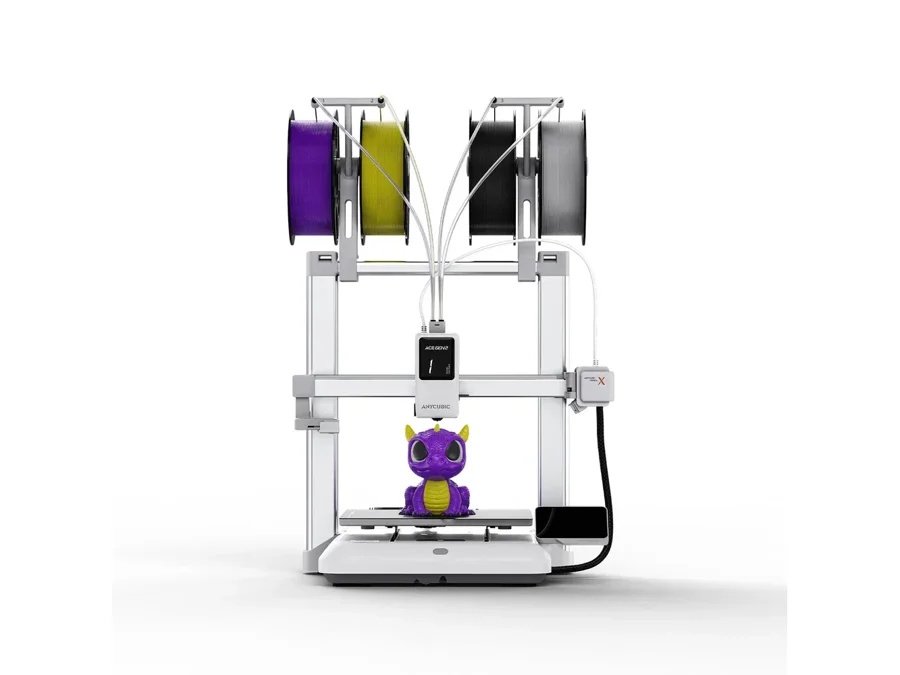
Anycubic sells filament printers from budget bed-slingers to large enclosed printers, along with its Photon line of resin printers.
Official site: Global store · US store
| Model | Type | Build volume (mm) | Enclosure | Max nozzle temp | Multicolor | Printer only | Multicolor combo |
|---|---|---|---|---|---|---|---|
| Kobra 4 | Bed-slinger | 260 × 260 × 260 | Open | 300°C | Up to 8 | $199 | $299 |
| Kobra X | Bed-slinger | 260 × 260 × 260 | Open | 300°C | 4 built in; up to 19 | $299 | $569 (7 colors) |
| Kobra 3 Max | Bed-slinger | 420 × 420 × 500 | Open | 300°C | Up to 8 | — | $619 |
| Kobra S1 | Core XY | 250 × 250 × 250 | Enclosed | 320°C | Up to 8 | — | $459 |
| Kobra S1 Max | Core XY | 350 × 350 × 350 | Heated, up to 65°C | 350°C | Up to 16 | — | $899 |
- Multicolor: the ACE Pro and ACE 2 Pro units, which also dry filament. The Kobra X has a four-color switcher built into its print head.
- Software: Anycubic Slicer Next and the Anycubic app. Anycubic has published part of its firmware code (its Klipper-go project) for several models. A community firmware called Rinkhals adds more local control to several recent models, but not the Kobra X.
Snapmaker
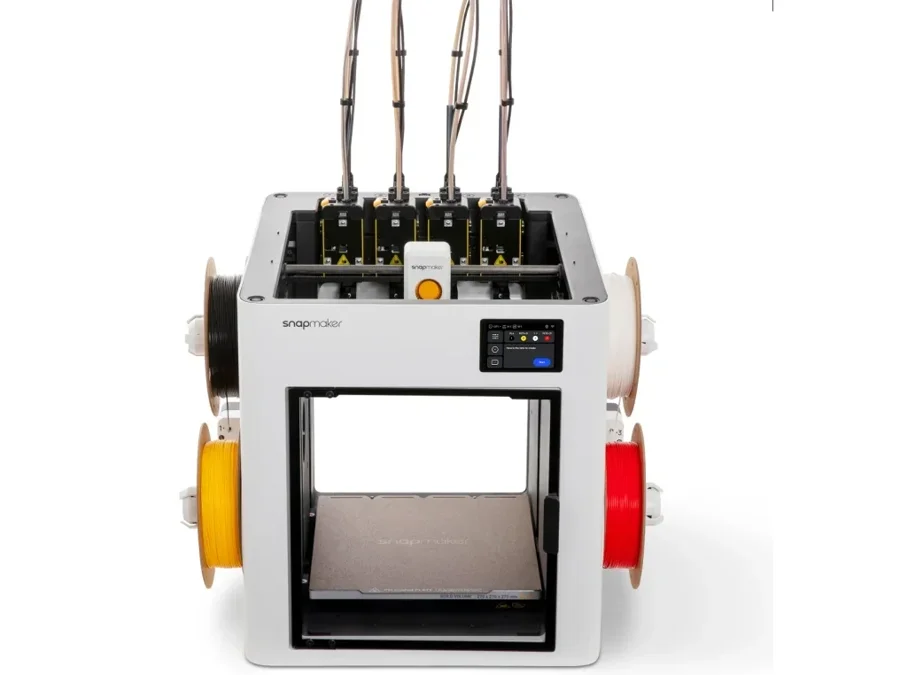
Snapmaker began in 2016 with a 3-in-1 machine that prints, laser engraves and CNC carves, followed by the Snapmaker 2.0, the Artisan and the J1 dual-extruder printer.
Official site: snapmaker.com · US store
| Model | Type | Build volume (mm) | Enclosure | Max nozzle temp | Multicolor | Printer only | Multicolor combo |
|---|---|---|---|---|---|---|---|
| U1 | Core XY toolchanger | 270 × 270 × 270 | Open top (cover sold separately) | 300°C | 4 print heads included | $749 | — |
| Artisan | 3-in-1 (print, laser, CNC) | 400 × 400 × 400 | Enclosed | 300°C | 2 (dual extrusion) | From $1,849 | — |
- Multicolor: instead of swapping filament through one nozzle, the U1 switches between its four print heads, one color or material per head.
- Software: a modified Klipper, with root SSH access since firmware 1.2.0 (March 2026). Snapmaker published its Klipper source on March 30, 2026; some features, including AI failure detection, remain closed. The Snapmaker Orca slicer is based on OrcaSlicer.
Not sure which materials you’ll print? Start with every 3D printing filament explained. Looking at resin instead? See every 3D printing resin explained.
Sources
- Bambu Lab: Authorization Control announcement
- Prusa: Open Community License announcement; Plus model update; Prusa customer support
- QIDI: QIDI US store; Q2 source code; Request for Plus5 source code; QIDI support policy
- Creality: Creality US store; K2 series source code; Klipper forum on K2 source code; Creality on its market share
- Elegoo: Centauri Carbon source code; Centauri Carbon 2 source code; Elegoo warranty
- Anycubic: Klipper-go source code; Rinkhals; Anycubic warranty
- Snapmaker: Snapmaker on the source release; Snapmaker U1 store page